
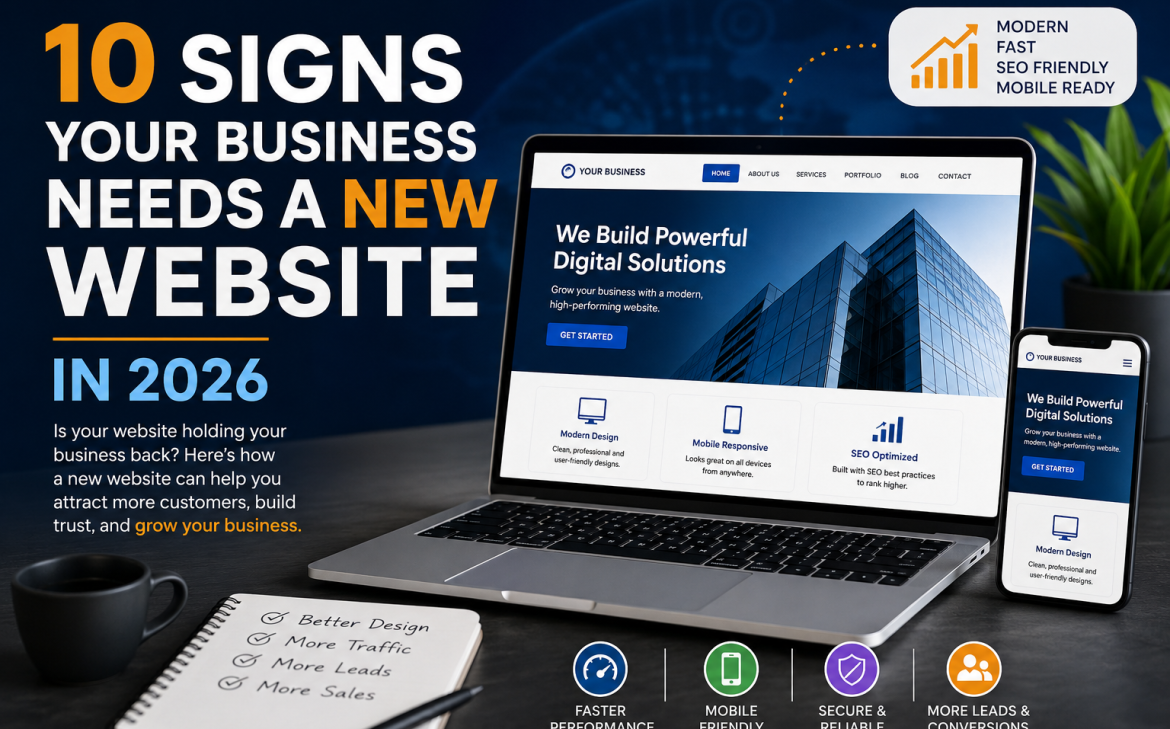
Your website is often the first impression people have of your business. In 2026, customers expect websites to be fast, mobile-friendly, secure, and easy to navigate. If your website feels outdated or fails to meet these expectations, it could be costing you valuable leads and sales.
A modern website is more than just an online presence—it’s a powerful tool for building trust, generating inquiries, and growing your business.
If you’re wondering whether it’s time for a redesign, here are 10 signs your business needs a new website.
1. Your Website Looks Outdated
Website design trends have changed significantly over the years. An outdated design can make your business appear less professional and less trustworthy.
A modern website should feature:
- Clean and attractive layouts
- High-quality visuals
- Easy-to-read typography
- Consistent branding
- Clear navigation
A fresh, professional design helps create a positive first impression and encourages visitors to stay longer.
2. Your Website Isn’t Mobile-Friendly
More than half of all website traffic now comes from smartphones. If your website doesn’t display properly on mobile devices, users are likely to leave and visit a competitor instead.
A responsive website should:
- Adapt to different screen sizes
- Load quickly on mobile
- Have easy-to-tap buttons
- Display readable text without zooming
A mobile-friendly website also performs better in search engine rankings.
3. Your Website Loads Slowly
Website speed directly impacts user experience and conversions.
Visitors expect pages to load within a few seconds. If your website is slow, many users will leave before they even see your content.
Common causes of slow websites include:
- Large image files
- Poor hosting
- Outdated plugins
- Unoptimized code
Improving your website speed can reduce bounce rates and increase customer engagement.
4. You’re Not Getting Enough Leads
If your website receives visitors but very few inquiries or sales, it may not be guiding users toward taking action.
A high-converting website includes:
- Strong call-to-action buttons
- Simple contact forms
- Clear service pages
- Customer testimonials
- Easy navigation
Your website should work as a 24/7 salesperson for your business.
5. Your Website Doesn’t Rank on Google
Even the best-looking website won’t help your business if people can’t find it.
If your website isn’t appearing in Google search results, it may have:
- Poor SEO structure
- Missing keywords
- Slow loading speed
- Duplicate content
- Technical SEO issues
A website built with SEO best practices gives your business a better chance of attracting organic traffic.
6. Updating Your Website Is Difficult
Does making a simple change require technical expertise or developer support?
Modern content management systems make it easy to:
- Update text
- Add blog posts
- Upload images
- Create new pages
- Edit contact information
If managing your website feels complicated, it may be time for an upgrade.
7. Your Website Doesn’t Reflect Your Brand
Your business evolves, but many websites don’t.
If you’ve changed your services, branding, logo, or target audience, your website should reflect those changes.
Your website should clearly communicate:
- Who you are
- What you offer
- Why customers should choose you
Consistency builds trust and strengthens your brand identity.
8. Security Features Are Outdated
Cybersecurity is more important than ever.
An outdated website may expose your business and customers to security risks.
A secure website should include:
- SSL certificate (HTTPS)
- Regular software updates
- Secure hosting
- Strong password protection
- Regular backups
Keeping your website secure helps protect customer data and improves trust.
9. Your Competitors Have Better Websites
Take a look at your competitors’ websites.
If their websites are faster, easier to use, and more visually appealing, potential customers may choose them over you.
A professionally designed website helps your business stay competitive in your industry.
10. Your Website Doesn’t Support Business Growth
As your business grows, your website should grow with it.
A modern website should support:
- Online bookings
- E-commerce
- Lead generation
- Live chat
- Blog publishing
- Marketing integrations
- Analytics tracking
If your current website limits your business goals, it’s time to invest in a better solution.
Benefits of Redesigning Your Website
A professionally redesigned website can provide several long-term benefits, including:
- Better user experience
- Improved Google rankings
- Faster loading speeds
- Increased customer trust
- Higher conversion rates
- Stronger brand identity
- More leads and sales
- Better mobile performance
A well-designed website isn’t just about aesthetics—it’s about helping your business achieve measurable results.
How Often Should You Update Your Website?
While there’s no fixed timeline, many businesses benefit from reviewing their website every 2–4 years. Technology, customer expectations, and search engine algorithms change quickly, so regular updates help keep your site secure, relevant, and competitive.
Instead of waiting until your website becomes outdated, monitor its performance regularly and make improvements when needed.
Final Thoughts
Your website is one of your most valuable digital assets. If it loads slowly, looks outdated, isn’t mobile-friendly, or isn’t generating leads, it could be holding your business back.
Investing in a modern, SEO-friendly website can improve your online visibility, build customer trust, and create more growth opportunities. Whether you’re a small business or an established company, keeping your website up to date is essential in today’s competitive digital landscape.
If you’ve noticed several of the signs mentioned above, now may be the right time to refresh your website and give your business the online presence it deserves.

Leave feedback about this